
For first-time readers
If you have opened a Bible, felt lost by page three, and quietly closed it again, this is for you.
By Cliff Edmonds · 5 min read
If you have ever opened a Bible, felt lost somewhere around page three, and quietly closed it again, you are in good company. The Bible is the best-selling book in history and also one of the least finished. It is long, it jumps between poetry and law and history, and starting on page one often lands a new reader in genealogies and building instructions within a week. That is not a sign you are doing it wrong. It is a sign that no one handed you a map.
Here is a simple, honest way to begin, built for someone opening the Bible for the first time.
You do not have to read the Bible in the order it is printed. Most people who give up did exactly that and got stuck in Leviticus. Instead, start with the life of Jesus, in the Gospel of John or Mark. The whole story points to him, so meeting him first gives everything else a center. Once John feels familiar, the rest of the Bible starts to make more sense, because you know who it has been talking about all along.
Reading the Bible is not a test of holiness, and older, more formal English is not more spiritual. It just gets in the way when you are starting out. A clear, modern translation reads in plain sentences and lets you follow the meaning without a decoder ring. Choose the version you understand, not the one that sounds most impressive. Understanding is the point.
Ten quiet minutes most days will take you further than one heroic three-hour session you never repeat. A chapter a day is plenty. Consistency is what changes you, not volume.
“Your word is a lamp to my feet, and a light for my path.”
Notice the picture there. A lamp in the ancient world lit the next step, not the whole road. You are not meant to see the entire journey at once. You are meant to take the next step in the light you have.
You do not need a seminary degree to read well. For any passage, ask three things. What does this show me about God? What does it show me about people, including me? And is there something here to do, or to trust? Those questions turn reading into a conversation instead of a chore.
The Bible was meant to be read in company. A friend, a small group, a church, or a good guide will save you from getting stuck and help you see how the pieces fit. This is exactly why we built The Bible Made Simple: a plain-language overview of every book, so you can see the shape of the whole story while you read the parts.
The goal is not to win a trivia game about ancient names. It is to know God and be changed by him. Come with an open heart and a little patience with yourself. You will not understand everything at once, and you were never meant to.
If you want a simple on-ramp, try this. Spend your first two weeks in John, one chapter a day. Then read Genesis 1 to 3 to see where the story begins. Then dip into a few Psalms when you need words for prayer, and read Mark for a fast, vivid account of Jesus. By then you will have a feel for it, and you can keep going with confidence.
Start small. Stay curious. The book that felt closed will start to open.
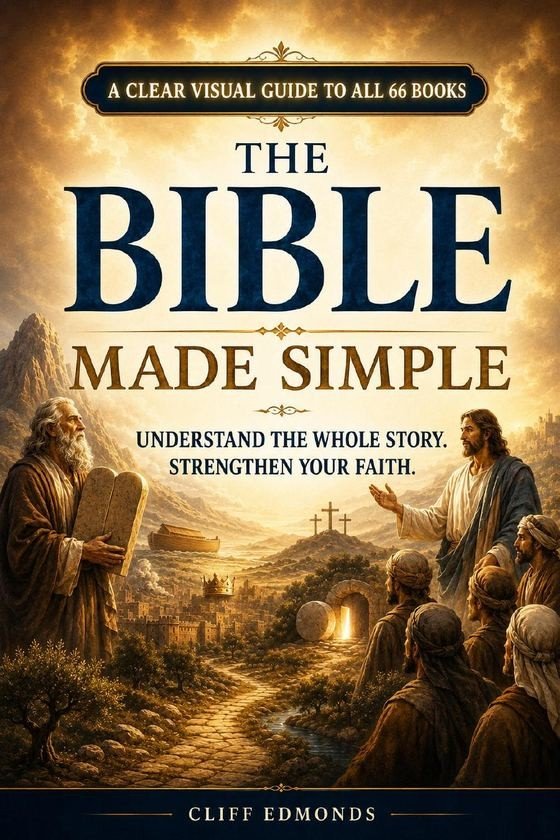
The Bible Made Simple walks through all 66 books in plain language, so nothing feels like a maze. Start with a free sample.